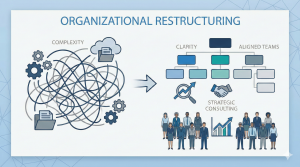

Many companies pursue strategic partnerships as a shortcut to growth,
market entry, or capability expansion.
In reality, partnerships can either accelerate success
or silently drain an organization from within.
When Partnerships Create Real Value
1. When They Fill a Clear Strategic Gap
A strong partner complements rather than duplicates your capabilities.
2. When Objectives Are Aligned and Measurable
Unclear goals lead to predictable conflicts.
3. Clearly Defined Roles and Responsibilities
Without clarity, partnerships turn into power struggles.
4. Balanced Influence and Decision Power
Imbalance creates dependency, not collaboration.
5. A Defined Exit Strategy from Day One
Knowing how to exit is part of entering smartly.
When Partnerships Become a Risk
- Over-dependence on a partner
- Lack of governance and control
- Relationship-driven, not strategy-driven alliances
- Scaling before internal readiness
The BLI Perspective
At BLI, partnerships are not viewed as quick agreements.
They are strategic decisions designed to:
- Support long-term growth
- Protect organizational independence
- Strengthen sustainability
Successful partnerships are not just signed — they are engineered.